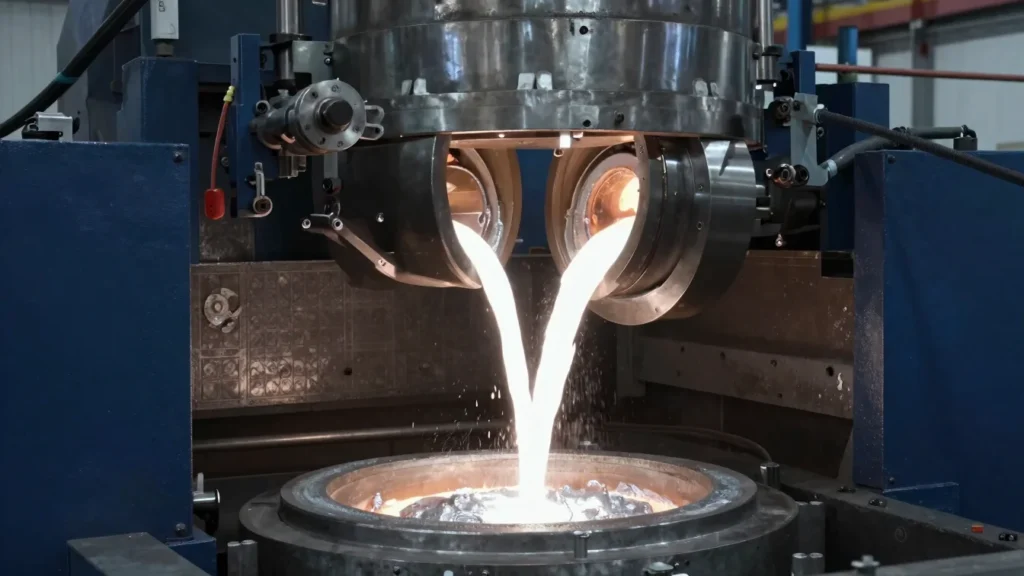
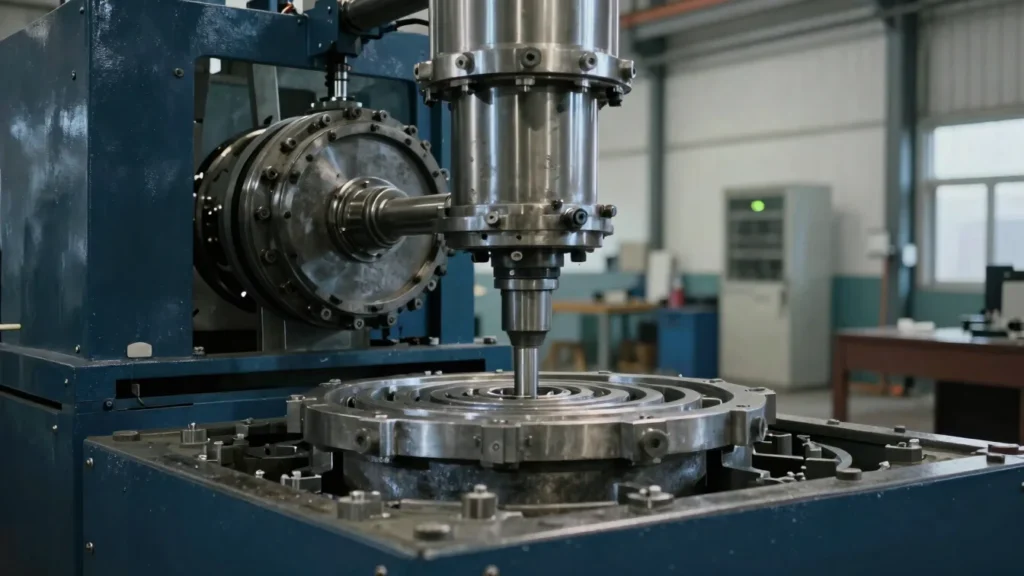
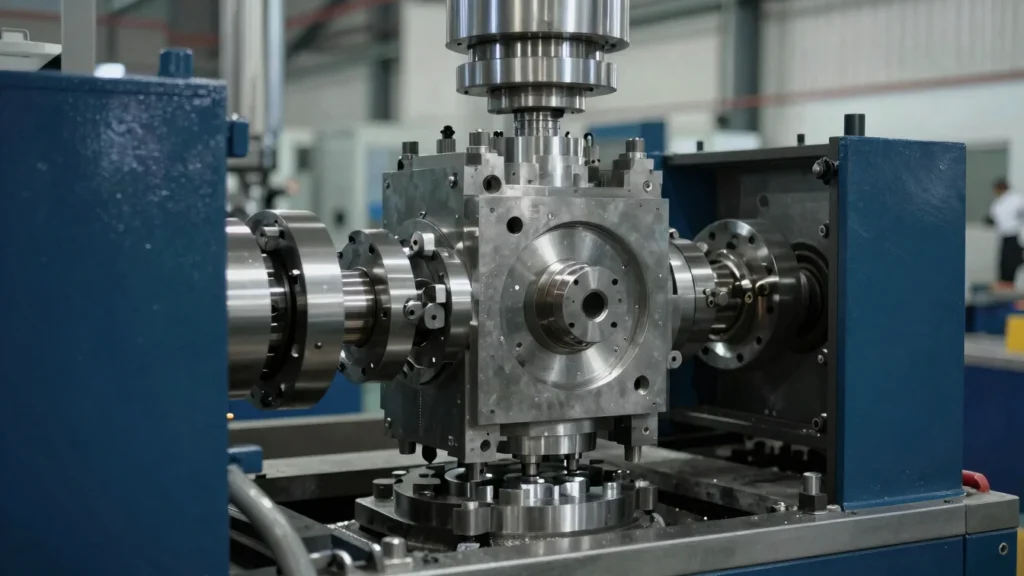
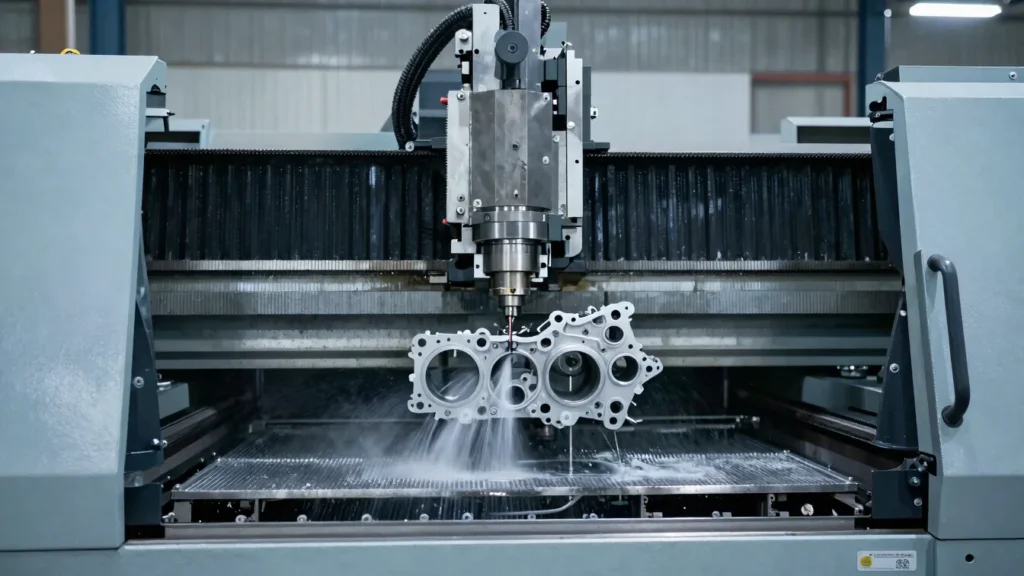
We work across gravity die casting, low-pressure and high-pressure die casting, precision forging and CNC machining. Each route is matched to the alloy, wall thickness and structural demands of the component.
Casting methods compared
Gravity, LPDC and HPDC differ in how molten aluminum is delivered to the die. The choice shapes porosity control, alloy suitability and the structural integrity of thin and thick walls.
Gravity die casting
Metal flows under gravity into permanent molds, giving dense, pressure-tight tanks for thermal management with controlled wall thickness.
Low-pressure die casting
Controlled pressure from below fills the cavity smoothly, reducing turbulence and supporting pressure-tight castings for demanding thermal parts.
High-pressure die casting
High injection pressure fills thin walls rapidly, suited to high-volume structural automotive parts with consistent repeatability.
From billet to finished component
Precision aluminum forging shapes billet into dense, directional grain structure, then multi-axis CNC milling and turning hold tight tolerances on critical mounting faces.
Process sequence
Forging and casting preforms move through heat treatment, multi-axis milling and turning, then dimensional checks before release.